
A practical guide to spotting when bespoke software, integrations or ongoing application support make more sense than another off-the-shelf tool.
June 29, 2026
Custom software is tempting when a business has outgrown its tools. The hard part is knowing whether the answer is genuinely a bespoke build, a better off-the-shelf product, or a smaller integration that removes the most painful manual work.
The strongest software projects usually start with a clear operational problem. A team is repeating the same admin every week, customer information is scattered between systems, reporting takes too long, or an important process depends on spreadsheets that only one person fully understands. At that point, software is no longer just a technical decision. It becomes a question of control, efficiency and how the business wants to work.
When custom software is the right call
Off-the-shelf tools are often the right choice for common jobs. If the process is generic and a mature product already handles it well, buying can be faster, cheaper and easier to support.
Custom software starts to make sense when the process is specific to how the business operates, creates value or protects service quality. That might mean a workflow system, internal CRM, customer portal, reporting dashboard or management platform that needs to match a real operating model rather than a generic feature list.
That is where bespoke applications earn their place. The goal is not to build software for the sake of it. The goal is to remove friction from the work that matters most, while giving the business ownership over how that system evolves.
Start with the process, not the platform
A useful software brief should describe the job the system needs to do before it describes the technology. Who uses it? What do they need to complete? What data has to be captured? What decisions should the system enforce? Where does responsibility move from one person to another?
Those questions matter because software projects go wrong when they jump straight to features. A feature list can hide uncertainty. A process map exposes it. Once the workflow is clear, the interface, permissions, data structure and technical architecture have something solid to serve.
For business-critical systems, this early thinking is often the difference between a tool that people work around and a platform they can trust every day.
Build less first
The first version of a custom system should be focused. It does not need to solve every future problem on day one. It needs to solve the right first problem well enough that real users can adopt it, test it and shape what comes next.
This is especially important for internal software. Teams often know the pain points, but they do not always know how a new system will change behaviour until they start using it. A smaller first release helps protect the budget, reduce risk and keep feedback practical.
That does not mean cutting corners. It means choosing a clear foundation, building the core workflow properly and leaving space for the system to grow without needing to be rebuilt every time the business changes.
Make integrations part of the plan
Most useful software does not sit alone. It needs to connect to other tools, whether that is a CRM, accounts platform, payment provider, document system, website, customer portal or reporting tool.
Planning API integrations early avoids a common problem: a new system that works neatly in isolation but creates more admin everywhere else. The integration layer should be treated as part of the product, not a bolt-on at the end.
Good integrations reduce duplicate entry, improve data quality and make reporting more reliable. They also make the system easier to extend later, because the business is not locked into a set of disconnected tools.
Plan for support after launch
Custom software is not finished when it launches. Browsers change, frameworks move on, integrations need maintenance, security updates matter and users will find better ways to work once the system becomes part of daily life.
That is why application support should be part of the decision from the start. A good support plan keeps the system stable, but it also gives the business a route for improvements, bug fixes, performance work and new features.
This is where long-term ownership becomes valuable. Instead of waiting for a software vendor to add a feature that may never come, the roadmap can follow the business. The system can adapt around real needs, not generic product priorities.
The useful test
If a tool almost fits, custom software may be unnecessary. If every team has built workarounds around the same limitation, it is worth looking more closely.
The best signal is repeated friction in a process that matters. If staff are copying data between systems, manually chasing tasks, rebuilding reports, managing customer actions over email or relying on one person to keep the process moving, there may be a stronger case for a bespoke system.
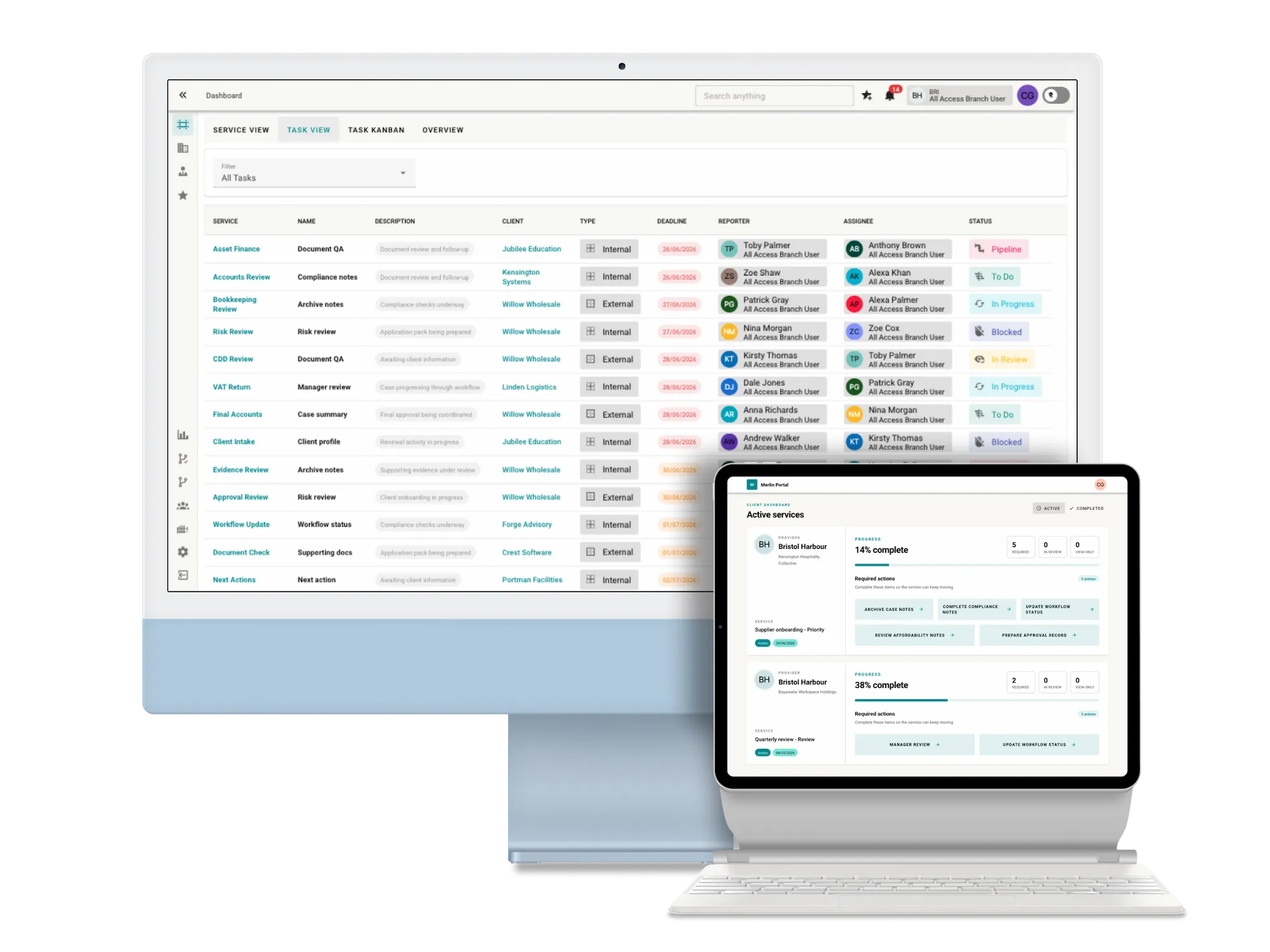
Our recent process management system case study shows how that can look in practice: configurable workflows, task ownership, customer-facing actions and document generation brought into one controlled system.
Custom software should give a business more control, not more complexity. When the process is important enough, specific enough and repeated often enough, a focused build can become a practical asset that keeps improving long after launch.
On the hunt for a good agency?
Get in contact with us today to see how Weird Wolf Agency can help you, we will be listening out for your howl...