
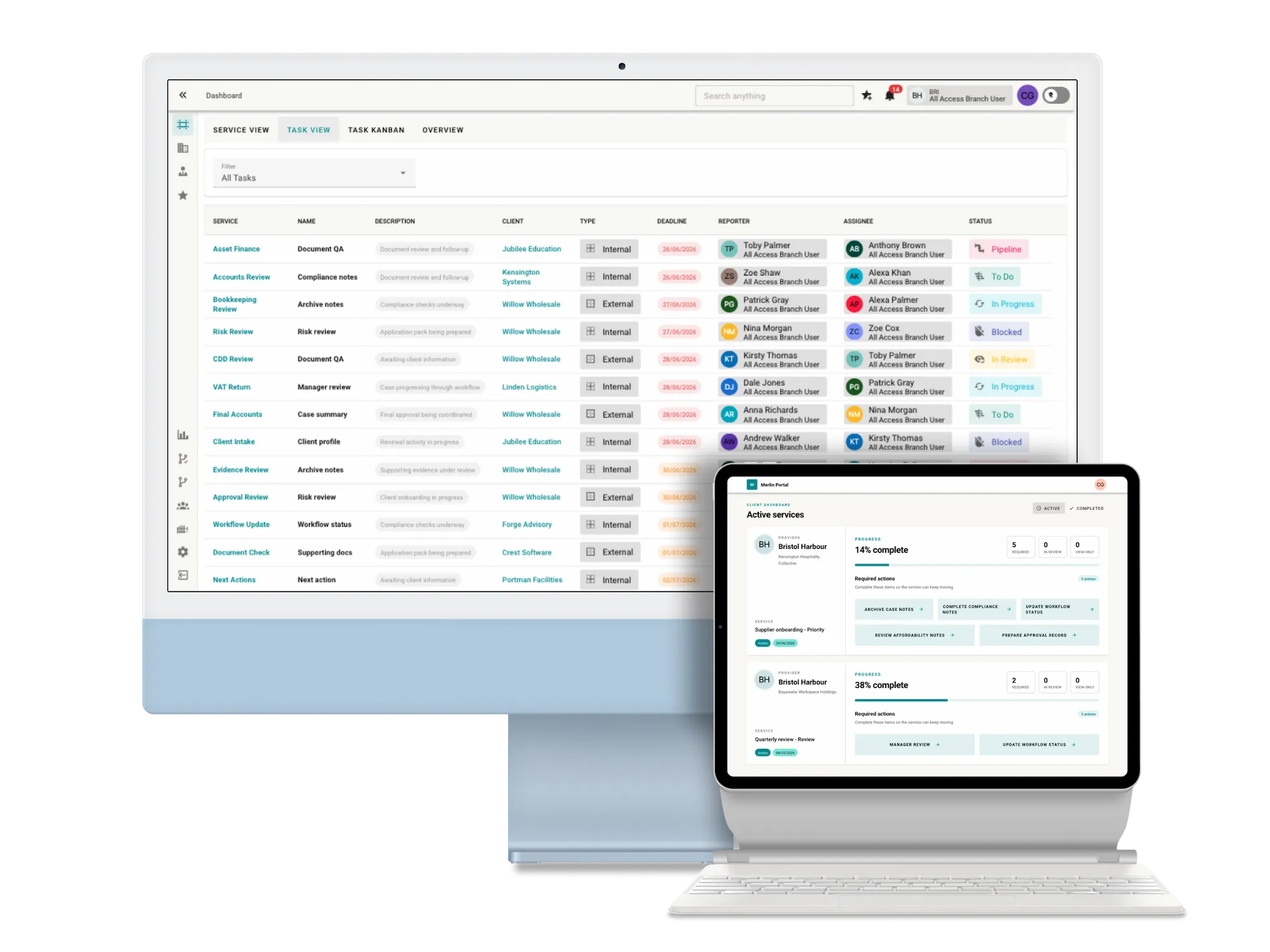
Still running jobs in spreadsheets alongside your CRM? Explore where standard software falls short and when a bespoke application could fill the gaps.
September 2, 2026
Your CRM holds the customer details, but the work still happens somewhere else. Jobs are scheduled in a spreadsheet, progress updates arrive by email, and someone has to pull everything together before an invoice can be raised.
That can be a sign of a gap between managing customer relationships and managing the operation itself. A standard CRM may do its job well while leaving important parts of your business outside the system. Understanding that gap helps you decide whether to extend what you have or build software around the way you work.
Managing a customer is only part of the job
A customer relationship management system gives a business a shared place for contacts, enquiries and sales activity. Depending on the platform and setup, it may also support tasks, automation, reporting and other stages of the customer journey.
The question is whether those capabilities cover your process in enough detail. Winning a job might be followed by site visits, vehicle or equipment records, staff allocation, purchasing, approvals and customer sign-off. Each stage has its own information, responsibilities and exceptions.
For example, a repair business might need to record several vehicles against one customer, assign technicians, capture the work completed and collect a signature before invoicing. A sales pipeline alone does not describe that journey. The business needs a way to connect the customer record to the work being delivered.
Some platforms can accommodate that through their existing features or extensions. Where they cannot, staff often create a second system around the first.
The spreadsheet shows you what is missing
Look closely at the spreadsheets your team relies on. A daily job list, a pricing calculator or a record of work awaiting approval may contain the operational detail that never found a useful home in the CRM.
The columns reveal information the business needs. Colour coding may represent status or urgency. Formulas may encode pricing rules. Separate tabs might divide work between locations, teams or stages of completion.
A spreadsheet can be a sensible tool for analysis or an occasional task. It deserves closer attention when it becomes essential to keeping the operation moving, particularly where several people need to update it or other systems depend on its contents.
Common signs of a gap include:
- Staff entering the same customer or job details in several places
- Managers combining spreadsheets to understand current workloads
- Approvals depending on emails or verbal confirmation
- Completed work waiting for someone to prepare the billing information
- Only one person understanding how a critical spreadsheet works
These workarounds give you a useful starting point for a software brief. They show what people need to do and where the existing tools make it difficult.
Know when configuration has reached its limit
Before commissioning a new system, establish what your current CRM can reasonably support. A clearer setup, an appropriate extension or a better connection to another application may resolve the problem.
Adding more custom fields is not always enough, though. A field can store a value without controlling who can change it, which step comes next or what must happen before a job can be completed. Those rules may matter as much as the information itself.
Assess the complete process, including the awkward cases. Can one customer have several active jobs with different contacts and billing arrangements? Can staff see the right information on a tablet while working? Can managers identify delays without asking someone to rebuild a report?
Where meeting essential requirements demands layers of manual work or fragile customisation, a bespoke application becomes worth considering. Our guide to when to build custom software explores that decision in more detail.
Bespoke software can connect the missing steps
A bespoke application can be designed around the records, roles and stages your operation needs. That might mean a live job queue for staff, a scheduling view for managers and a completion process that gathers the information needed for invoicing.
The value comes from connecting those steps. When someone updates a job, the next person should be able to work from the same record, with clear responsibility and an appropriate level of access. Reporting can then draw on the information captured during the work.
Our bespoke application development focuses on those business requirements, so the system supports the process rather than leaving staff to bridge the gaps themselves.
This does not automatically mean replacing the CRM. It may remain the right place for sales and customer relationships, while a bespoke application handles delivery. A suitable API integration can connect them, subject to the access and capabilities each platform provides.
Replacing the existing platform is a separate decision. Compare the ongoing subscription and integration costs, the effort involved in moving data, and the support and maintenance a bespoke system will need.
Start with the work your CRM leaves behind
Choose one process that regularly takes the team out of the CRM. Follow it from the first request to the completed outcome, recording the people involved, information copied and decisions made along the way.
Use that picture to define what a better system must achieve. It might need to remove repeated entry, make job progress visible or carry approved work through to billing. A specific outcome gives you a stronger basis for deciding what to configure, connect or build.
If your spreadsheets have become the working system behind your CRM, Weird Wolf can help map that process and assess where bespoke software would make a practical difference. Bring us the workflow your team relies on, and we can start with what it needs to do better.
On the hunt for a good agency?
Get in contact with us today to see how Weird Wolf Agency can help you, we will be listening out for your howl...