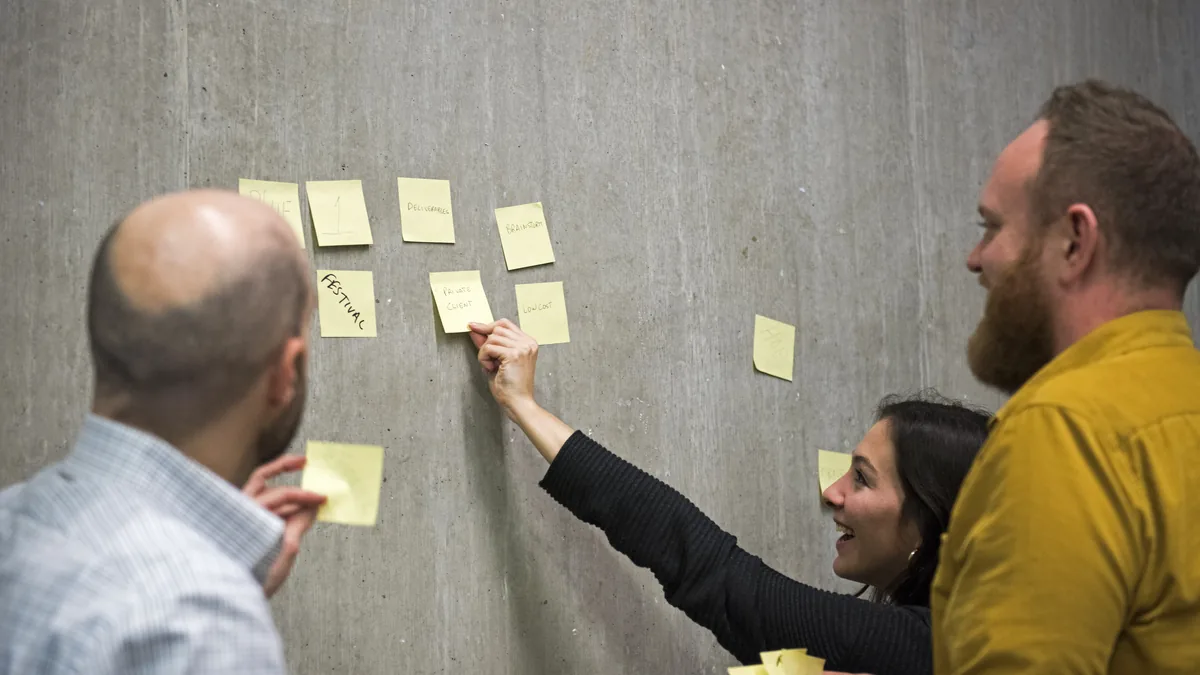
Great ideas don’t die in boardrooms, they get buried under “Can we just…” feedback.
May 4, 2025
Strong creative work needs collaboration, but it also needs direction. When too many people are asked to shape every decision, a clear idea can quickly become watered down, inconsistent or difficult to recognise.
That is the problem with design by committee. It usually starts with good intentions. You want people to feel heard, you want internal buy-in and you want the final work to feel right for the business. The challenge is that feedback without structure can pull a project in too many directions at once.
The result is rarely stronger design. More often, it is work that feels safe, busy or disconnected from the original goal.
What happens when everyone shapes the work
Involving the right people is important. The issue is not collaboration itself, but unclear decision-making.
When too many opinions carry equal weight, a few common problems start to appear:
- The original vision gets diluted, turning a clear direction into a list of compromises.
- Design becomes decoration, responding to personal taste instead of solving a business problem.
- Feedback loops get longer, taking more time, stretching budgets and slowing momentum.
- The final result feels less distinctive, ticking internal boxes but struggling to stand out to the people it needs to reach.
This is not about protecting egos. It is about protecting impact. Creative work needs enough focus to do its job properly.
Why design by committee happens
Design by committee is common because it feels fair. Nobody wants to exclude useful voices, especially when a project affects several teams or stakeholders.
It usually appears when:
- There is no clear creative lead or final decision-maker
- The brief is too loose to guide feedback
- Stakeholders are asked for opinions without being given the project goals
- Personal preference is treated as equal to strategic thinking
- Teams are worried about getting the decision wrong, so they try to make the work appeal to everyone
The intention is usually positive. The outcome is often less so, because design that tries to please everyone rarely speaks clearly to anyone.
How to keep feedback useful
You can keep collaboration healthy without letting it slow the project down. The key is to define how decisions will be made before the work reaches the review stage.
- Choose a creative lead
One person should be responsible for holding the creative direction and making final calls. Others can still contribute, but there needs to be a clear route to a decision. - Use the brief as the reference point
If feedback does not connect to the brief, audience or objective, it may be personal preference rather than a useful project note. - Set feedback windows
Clear review stages keep the project moving and help stakeholders give feedback when it can be used properly. - Ask better questions
Instead of asking whether people like the design, ask whether it solves the problem, speaks to the audience and supports the intended outcome. - Trust the specialists you have brought in
A good creative team should explain its thinking, listen carefully and challenge where needed. The best results come when that expertise is allowed to guide the work.
When the brief, decision-maker and outcome are clear, work like Meraki's brand refresh has room to land with confidence instead of compromise.
You need the right input, not every input
Good feedback is specific, timely and connected to the project goals. It helps clarify the work rather than simply adding more opinions to it.
Before acting on feedback, it helps to ask:
- Does this help solve the brief?
- Will it make the work clearer for the audience?
- Is it based on evidence, strategy or a defined business need?
- Does it move the project closer to the intended result?
If the answer is yes, the feedback is worth exploring. If not, it may be a distraction from the work the design needs to do.
At Weird Wolf, we value collaboration because it makes creative work stronger. We also believe collaboration works best when it has structure, purpose and a clear decision-making process behind it.
If you want a creative partner who can guide the process, challenge assumptions and keep the work focused on results, let’s talk.
On the hunt for a good agency?
Get in contact with us today to see how Weird Wolf Agency can help you, we will be listening out for your howl...